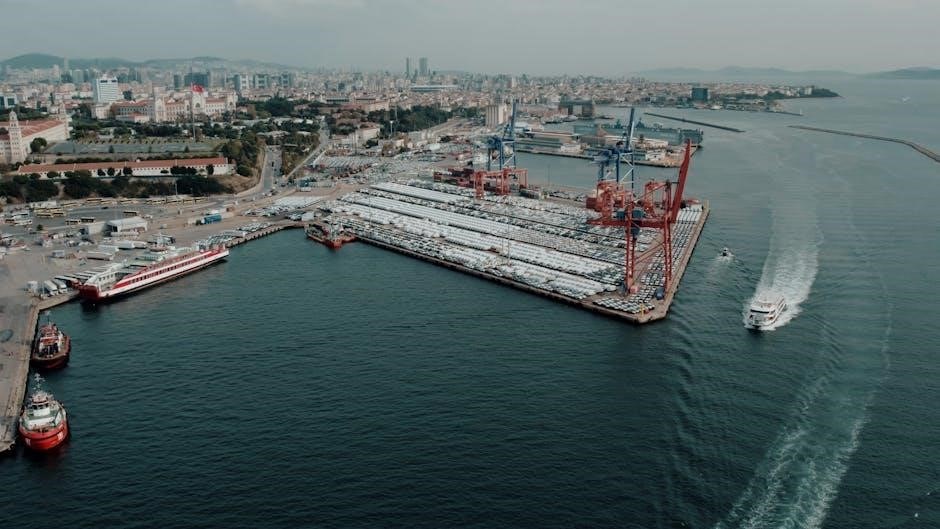
boat hoist guides
Boat Hoist Guides: A Comprehensive Overview (Updated 04/01/2026)
Boat hoist guides are crucial components, ensuring smooth and protected vessel positioning during lifting and docking procedures.
Selecting the correct guides,
considering shoreline
conditions and boat weight,
is paramount for
optimal lift functionality
and long-term durability.
What are Boat Hoists and Boat Lifts?
Boat hoists and boat lifts are both essential systems designed to remove vessels from the water, primarily for maintenance, repair, cleaning, and secure storage. While often used interchangeably, understanding their distinct characteristics is vital. A boat lift generally refers to a platform that raises the entire boat out of the water, keeping it suspended above the surface. These lifts often feature a cradle or bunk system to support the hull.
Conversely, a boat hoist typically employs a mechanical system – often hydraulic or electric – to lift the boat vertically. Hoists are frequently used in commercial settings like marinas for servicing multiple vessels. Both systems benefit greatly from the inclusion of boat hoist guides. These guides are critical for directing the boat during the lifting and lowering process, preventing damage to both the vessel and the lift mechanism.
ShoreMaster emphasizes durable lift frames, resisting twisting and requiring less maintenance, which highlights the importance of a robust system supported by effective guides. Jet Dock points out that both lifts and hoists serve the purpose of removing a vessel from the water, and guides contribute to the safe execution of this process. Ultimately, both systems aim to maximize convenience and minimize maintenance, and properly installed guides are integral to achieving these goals.
Key Differences: Boat Hoist vs. Boat Lift
While both boat hoists and boat lifts achieve the same fundamental goal – removing a boat from the water – their operational mechanisms and typical applications differ significantly. Jet Dock clarifies this distinction, noting both are used for maintenance or storage, but their approaches vary. Boat lifts generally provide full-hull support, raising the entire vessel as a unit, often suited for personal, recreational use.
Boat hoists, however, often utilize a more focused lifting point, potentially employing straps or slings, and are commonly found in commercial marinas for servicing numerous boats. This difference impacts the role of boat hoist guides. With lifts, guides ensure stable and even distribution of weight during ascent and descent. With hoists, guides are even more critical for precise alignment and preventing swinging or instability during the lifting process.
ShoreMaster’s focus on durable frames underscores the need for guides to work in harmony with a robust lifting structure. HydroHoist’s emphasis on correct replacement parts highlights the importance of compatible guides for optimal functionality. Ultimately, the choice between a hoist and lift influences the specific requirements for guide selection and installation.
Types of Boat Hoists Available
The selection of a boat hoist dictates the type of boat hoist guides required for safe and efficient operation. Vertical boat hoists are common, utilizing a direct lifting mechanism, demanding guides that offer precise vertical alignment and prevent lateral movement. Hydraulic boat hoists, known for their power and control, necessitate guides capable of handling significant weight and ensuring smooth, synchronized lifting.
Travel lift hoists, designed for larger vessels, require robust guide systems that can accommodate substantial loads and varying hull shapes. These often involve multiple guide points for enhanced stability. Beyond these primary types, specialized hoists exist for specific applications, each with unique guide requirements.
Regardless of the hoist type, guides must be constructed from durable materials, resisting corrosion and wear. ShoreMaster’s emphasis on stress-resistant frames highlights the importance of guides that can complement the hoist’s structural integrity. Proper guide selection, informed by the hoist’s capacity and the vessel’s dimensions, is crucial for maximizing lift performance and minimizing maintenance, as suggested by HydroHoist’s repair tips.
Vertical Boat Hoists: Advantages and Applications
Vertical boat hoists excel in situations demanding a compact footprint and straightforward operation, making them ideal for smaller vessels and limited spaces. Their direct lifting action necessitates boat hoist guides that prioritize precise vertical alignment, preventing swaying or collision during the lifting process. These guides must effectively manage lateral forces, ensuring the boat remains centered throughout the lift cycle.
The simplicity of vertical hoists translates to reduced maintenance, but the guides themselves require regular inspection and upkeep. ShoreMaster’s focus on durable frames underscores the need for guides that can withstand repeated stress and seasonal changes.
Applications include private docks, marinas with space constraints, and areas requiring quick boat removal for storm protection. Properly installed guides enhance the hoist’s stability, contributing to the overall longevity of the system. Jet Dock highlights the importance of a secure docking system, which is directly supported by effective guide functionality.
Hydraulic Boat Hoists: Operation and Maintenance
Hydraulic boat hoists rely on fluid power for smooth, controlled lifting, demanding boat hoist guides capable of handling dynamic loads and precise positioning. The guides play a critical role in stabilizing the boat as the hydraulic system raises or lowers it, preventing unwanted movement and ensuring safe operation. Regular maintenance of these guides is paramount, as any misalignment or damage can compromise the hoist’s performance.

HydroHoist emphasizes the importance of using genuine replacement parts, extending to the guides, to maintain optimal functionality. Inspecting guides for wear, corrosion, and proper alignment should be a routine part of the maintenance schedule. The guides must withstand constant exposure to water and marine environments.
Proper guide maintenance minimizes stress on the hydraulic components, contributing to the hoist’s overall lifespan. ShoreMaster’s durable frame design complements the need for robust guides, creating a reliable lifting system. Consistent checks and timely repairs are essential for safe and efficient operation.
Travel Lift Hoists: For Larger Vessels
Travel lift hoists, designed for substantial vessels, necessitate exceptionally robust boat hoist guides. These guides must accommodate the increased weight and dimensions, ensuring stable and controlled movement throughout the lifting and travel process. Unlike smaller hoists, travel lifts often operate across significant distances, demanding guides that maintain precise alignment over extended runs;
The structural integrity of the guides is paramount, mirroring ShoreMaster’s emphasis on welded frames that resist twisting and racking. Larger boats exert considerable stress, requiring guides constructed from high-strength materials capable of withstanding these forces. Regular inspection for deformation or wear is crucial.
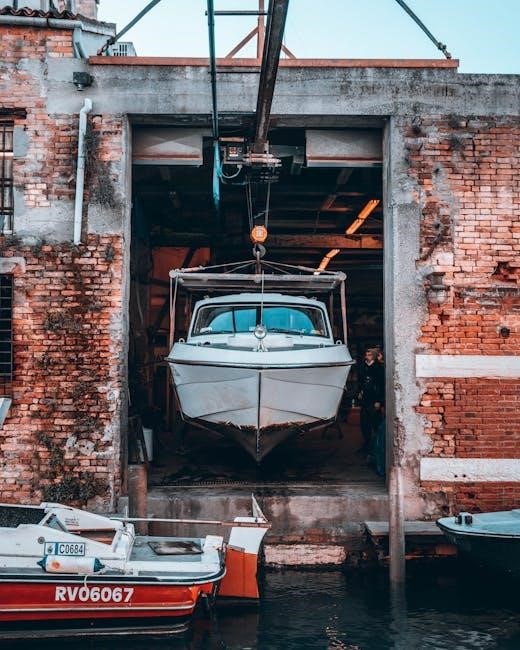
Jet Dock highlights the importance of understanding the differences between hoists and lifts, and this distinction is vital when selecting guides for travel lifts. Proper guide selection minimizes maintenance and maximizes convenience, ensuring the vessel remains securely positioned. A comprehensive dealer network, like ShoreMaster’s, provides expert guidance on appropriate guide specifications.
Boat Hoist Guides: Function and Importance
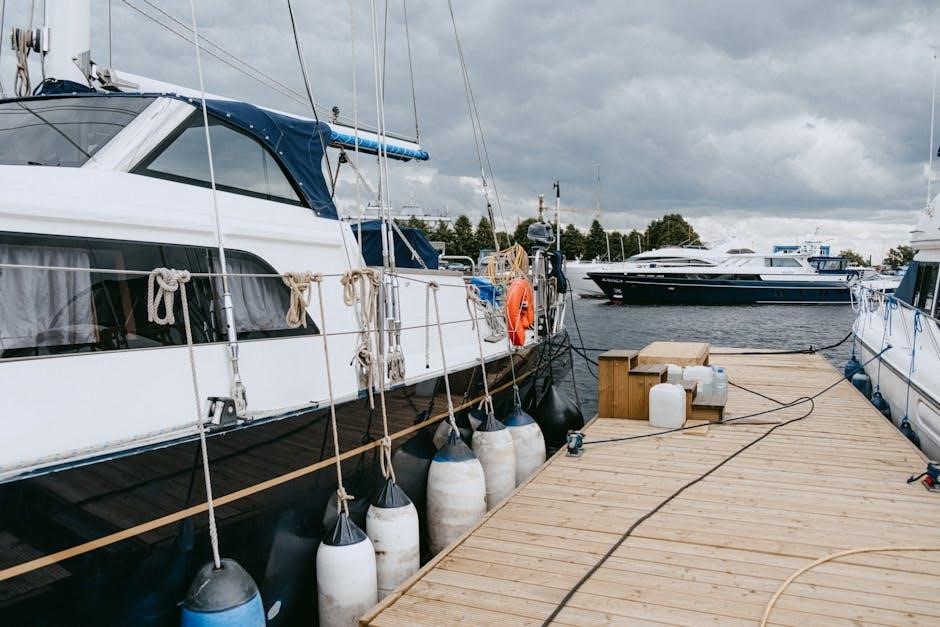
Boat hoist guides serve a critical function: they precisely align the boat during the lifting and lowering process, preventing damage to both the vessel and the hoist itself. These guides channel the boat, ensuring it remains centered on the lift, mitigating the risk of uneven weight distribution and potential instability. Their importance extends beyond simply guiding; they actively protect the boat’s hull from contact with hoist components.
As emphasized by Boat Lift Warehouse, maintaining a boat in shipshape condition requires attention to all aspects of its storage and maintenance, and guides are integral to this. Properly functioning guides minimize maintenance needs by reducing stress on the hoist mechanism and preventing hull abrasions.
HydroHoist stresses the importance of using correct replacement parts, and this applies to guides as well. Damaged or worn guides compromise the entire lifting system, potentially leading to costly repairs. Selecting guides designed for optimal functionality is a proactive step towards ensuring a safe and efficient operation.
Materials Used in Boat Hoist Guide Construction
Boat hoist guide construction prioritizes durability and resistance to the harsh marine environment. Commonly, these guides are fabricated from high-density polyethylene (HDPE), a plastic known for its exceptional impact strength, even at low temperatures. HDPE resists corrosion, UV degradation, and doesn’t require painting, reducing long-term maintenance.
Aluminum is another frequently used material, particularly in higher-capacity systems. Aluminum offers a favorable strength-to-weight ratio and inherent corrosion resistance, though it may require protective coatings in saltwater environments. The welded frames utilized by ShoreMaster, known for handling stress and resisting twisting, often incorporate aluminum components in guide construction.
Rubber bumpers or wear pads are often integrated into the guide design, providing a cushioning layer between the boat hull and the guide structure. These pads absorb impact and prevent scratching or damage during docking. The choice of material depends on factors like boat size, weight, and the specific demands of the lift system.
Choosing the Right Boat Hoist Guides for Your Lift
Selecting appropriate boat hoist guides demands careful consideration of several key factors. First, assess your boat’s size, weight, and hull shape. Guides must accommodate these dimensions without causing contact or damage during lifting and docking. Shoreline conditions – wave action, water depth, and bottom composition – significantly influence guide selection.
For areas prone to strong currents or waves, robust guides with enhanced stability are essential. Consider the lift’s capacity; guides must be rated to handle the vessel’s weight safely. The Infinity design from ShoreMaster allows for easy guide additions, offering flexibility as needs evolve.
Compatibility with your existing lift system is crucial. Ensure the guides are designed to integrate seamlessly with the lift’s framework. Finally, prioritize quality and durability, opting for guides constructed from corrosion-resistant materials like HDPE or aluminum to ensure longevity and minimize maintenance.
Installation of Boat Hoist Guides: A Step-by-Step Approach
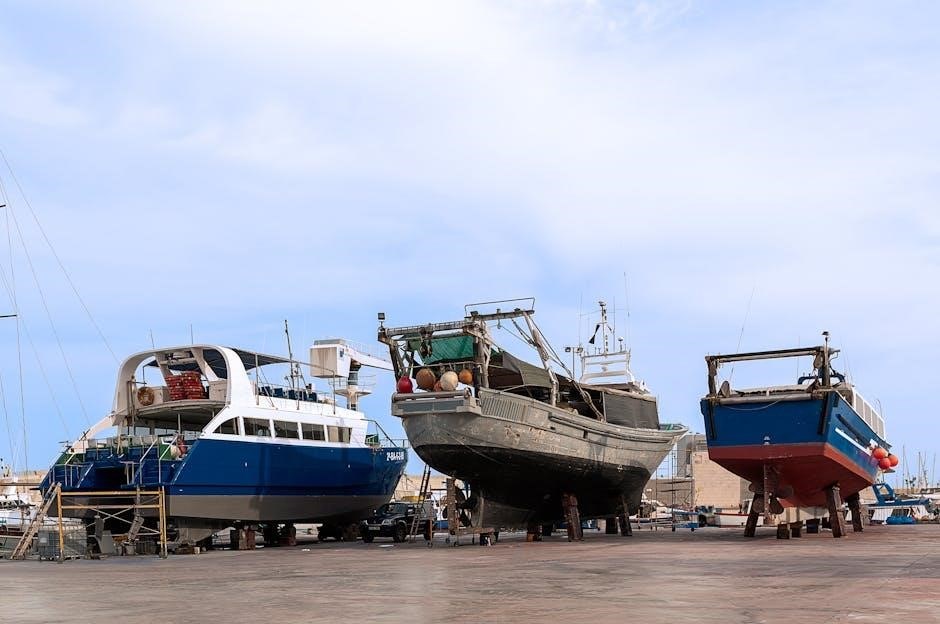
Proper installation of boat hoist guides is critical for safe and efficient operation. Begin by carefully reviewing the manufacturer’s instructions, as procedures vary between models. First, position the guides along the lift’s beams, ensuring accurate alignment with the boat’s hull. Securely attach the mounting brackets using appropriate hardware, tightening bolts to the specified torque.
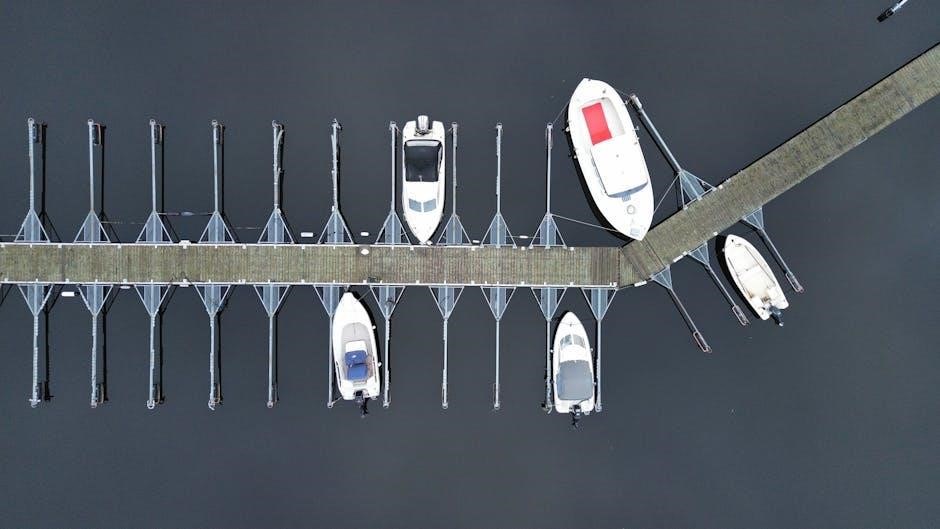
Next, verify the guides are level and plumb, adjusting as needed to prevent binding or uneven pressure. Double-check all connections for tightness and stability. It’s vital to consult your owner’s manual for specific part numbers and guidance during this process.
Finally, perform a test lift with the boat to confirm proper guide function. Observe for any interference or misalignment, making adjustments as necessary. Regular inspection post-installation is key to maintaining optimal performance and preventing potential issues.
Maintenance of Boat Hoist Guides
Regular maintenance of boat hoist guides is essential for prolonging their lifespan and ensuring reliable performance. Begin with routine visual inspections, checking for signs of wear, corrosion, or damage. Lubricate guide surfaces periodically to reduce friction and prevent sticking, using a marine-grade lubricant recommended by the manufacturer.
Inspect mounting hardware frequently, tightening any loose bolts or replacing corroded components. Promptly address any detected damage, replacing worn or cracked guides to avoid further issues. When replacing boat hoist parts, ensure a perfect fit and optimal functionality.
Furthermore, cleaning guides after each use helps remove debris and saltwater buildup. Consistent upkeep, guided by your owner’s manual, minimizes the need for extensive repairs and maximizes the value of your boat lift system.
Common Problems with Boat Hoist Guides and Solutions
Common issues with boat hoist guides often stem from wear and tear, corrosion, or improper installation. Sticking or binding can occur due to lack of lubrication or debris accumulation, easily resolved with cleaning and marine-grade lubricant application. Cracked or broken guides necessitate immediate replacement to prevent damage to the boat or lift system.
Corrosion, particularly in saltwater environments, weakens guide materials. Regular cleaning and protective coatings can mitigate this. Misalignment can cause uneven wear and difficulty docking; ensure proper installation and periodic adjustments.
When replacing damaged boat hoist parts, consult your owner’s manual or a qualified dealer for the correct part numbers. Ignoring these problems can lead to costly repairs and compromise the safety of your vessel. Proactive maintenance and timely repairs are key to avoiding significant issues.
Shoreline Conditions and Guide Selection
Shoreline characteristics significantly influence the optimal boat hoist guide selection. Rocky or uneven bottoms demand robust guides capable of withstanding abrasive forces and maintaining stability. Gentle, sandy shores allow for more flexible guide options, prioritizing smooth boat entry and exit.
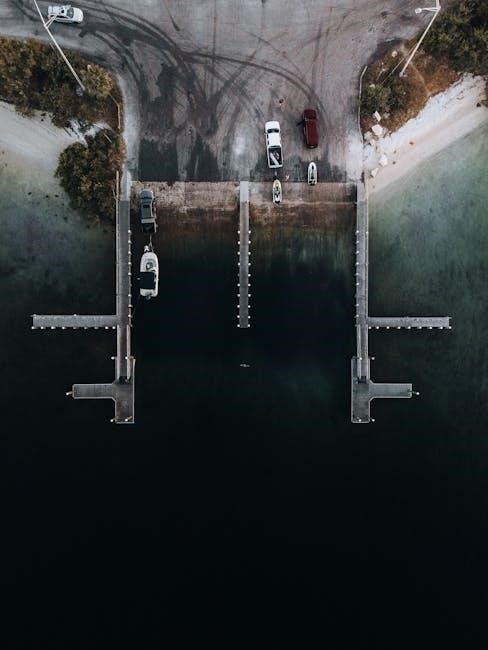
Wave action and water depth are critical considerations. Areas prone to strong waves require taller, more durable guides to prevent the boat from impacting the shoreline. Shallow water necessitates shorter guides to avoid bottoming out during operation.
The type of shoreline – whether natural or man-made – also plays a role. Bulkheads or seawalls may require specialized guide attachments for secure mounting. Choosing the right guides ensures compatibility with the environment, maximizing lift performance and protecting your investment.
Boat Weight and Capacity Considerations for Guides
Accurate boat weight assessment is paramount when selecting boat hoist guides. Exceeding the guide’s capacity compromises safety and can lead to structural failure. Always factor in the fully loaded weight of the vessel – including fuel, gear, and passengers – not just the dry weight.

Guide capacity must align with the boat lift’s overall lifting capacity. Guides act as crucial support elements, channeling the load during lifting and lowering. Selecting guides with insufficient capacity creates a weak link in the system;
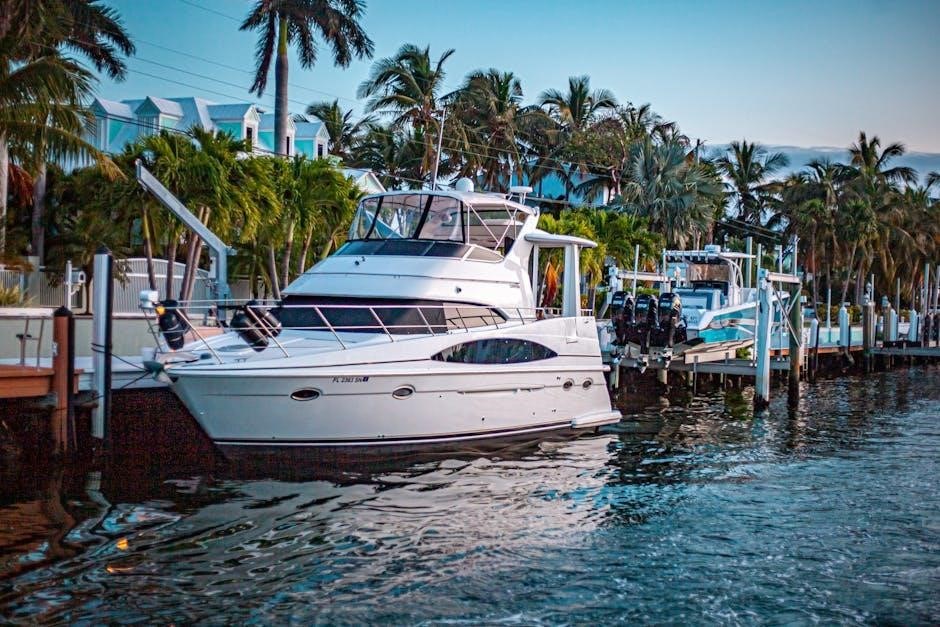
Consider the distribution of the boat’s weight. Pontoon boats, for example, distribute weight differently than V-hull vessels, influencing guide placement and required strength. ShoreMaster frames are designed to handle stress, but guides must complement this strength. Prioritize guides rated for a safety margin above the boat’s maximum weight.
Warranty Information and Reputable Manufacturers (ShoreMaster, HydroHoist, Jet Dock)
Reputable manufacturers like ShoreMaster, HydroHoist, and Jet Dock offer varying warranties on their boat hoist guides, reflecting their confidence in product durability. ShoreMaster provides a 15-year structural warranty on lift frames, suggesting robust guide integration. Always verify specific guide warranty details.
HydroHoist emphasizes using genuine replacement parts, including guides, to maintain warranty validity and optimal functionality. Utilizing non-approved guides can void the warranty and compromise lift performance. Jet Dock, while focusing on lift superiority, also implies the importance of compatible, quality guide systems.
Carefully review warranty terms regarding coverage for defects, corrosion, and wear-and-tear. Understand the claims process and required documentation. Choosing a manufacturer with a strong dealer network, like ShoreMaster, ensures accessible support and genuine parts availability for guide maintenance and replacement.