cuisinart 2 qt ice cream maker manual
Cuisinart 2 Qt Ice Cream Maker: A Comprehensive Guide
This guide delves into the Cuisinart 2-quart ice cream maker, offering insights from manuals, online communities, and recipes.
It covers operation,
maintenance,
and troubleshooting,
ensuring delightful homemade frozen desserts.
Understanding Your Cuisinart Ice Cream Maker
The Cuisinart 2-quart ice cream maker simplifies homemade frozen dessert creation. The instruction booklet, readily available on the Cuisinart website, details essential safeguards and features. It’s crucial to familiarize yourself with these before first use. The machine’s core function relies on a pre-frozen bowl, which chills the mixture as the paddle continuously stirs, creating a smooth texture.
Understanding the components – lid, mixing paddle, bowl, and motor base – is key. The manual provides illustrated directions for assembly and operation. Lost manuals are easily replaced with free downloads from various online resources. Properly understanding the machine’s mechanics ensures optimal performance and longevity, allowing you to enjoy delicious, customized ice cream, yogurt, sorbet, and gelato.
Key Features and Components
The Cuisinart 2-quart ice cream maker boasts several key features. Its double-insulated freezing bowl ensures efficient chilling without needing ice. The powerful motor drives the mixing paddle, consistently incorporating air for a smooth, creamy texture. The easy-lock lid with ingredient spout simplifies adding mix-ins during churning.
Essential components include the bowl itself, the motor base, the mixing paddle, and the lid. The manual highlights the importance of ensuring the paddle and lid are securely in place before operation. These components work in harmony to transform liquid bases into frozen delights. Understanding each part’s function, as detailed in the instruction booklet, is vital for successful ice cream making;
Safety Precautions
Prioritizing safety when using the Cuisinart ice cream maker is crucial. The manual emphasizes several precautions. Always unplug the unit before cleaning or disassembling. Never immerse the motor base in water or other liquids. Ensure the bowl is thoroughly frozen before use to prevent damage.
Keep hands and utensils away from the moving mixing paddle during operation. Supervise children closely when the appliance is in use. Do not operate the unit if the cord or plug is damaged. Adhering to these safeguards, as outlined in the provided documentation, will ensure a safe and enjoyable ice cream-making experience, preventing potential hazards.

Getting Started: Preparation is Key
Successful ice cream relies on proper preparation. The manual stresses pre-freezing the bowl for at least 24 hours and correctly assembling components before use.
Pre-Freezing the Bowl
The Cuisinart ice cream maker’s functionality hinges on a thoroughly frozen bowl. The instruction booklet emphasizes a minimum of 24 hours of freezing, ensuring the inner liquid is completely solid. This is crucial for achieving the correct ice cream consistency.
Ensure the freezer reaches a sufficiently low temperature – ideally, 0°F (-18°C) or lower. Avoid placing the bowl near the freezer’s heating elements. Before each use, double-check that the bowl is solid by gently shaking it; any liquid sloshing indicates insufficient freezing. A properly frozen bowl is the foundation for creamy, delicious homemade ice cream, and neglecting this step will result in a soupy mixture.
Assembling the Ice Cream Maker
Correct assembly is vital for the Cuisinart ice cream maker’s operation. Begin by placing the frozen bowl securely into the unit. Next, insert the dasher – the mixing paddle – into the bowl, ensuring it fits snugly. The instruction booklet stresses the importance of confirming the dasher is properly engaged to facilitate effective churning.
Then, attach the motor base to the bowl assembly, aligning the components correctly. Finally, secure the lid, making sure it clicks into place. The lid must be firmly attached before initiating the freezing process. Verify the mixing paddle and lid are in place before starting, as per the manual, to prevent spills and ensure optimal performance.
Ingredient Considerations
Successful ice cream relies on balanced ingredients. The Cuisinart manual emphasizes chilling the base mixture – combining cream, milk, sugar, and flavorings – for at least two hours, or ideally overnight. This ensures optimal freezing. Recipes often call for heavy cream, contributing to a richer texture.
Avoid adding solid ingredients directly; instead, incorporate them during the last few minutes of churning. The booklet doesn’t specify precise ingredient ratios, encouraging experimentation. Remember, the mixture will expand during freezing, so don’t overfill the bowl. Pre-chilling ingredients speeds up the process and improves the final consistency.

Recipes from the Cuisinart Booklet: A Review
The included recipes are a starting point, though brief. Users note a lack of metric conversions, and depth. Expanding beyond the booklet is recommended for detailed instructions.
Strengths and Weaknesses of Provided Recipes
The Cuisinart booklet recipes offer a convenient introduction to using the ice cream maker, providing a basic foundation for beginners. They demonstrate the core process and ingredient combinations, allowing users to quickly create their first batch of frozen dessert. However, a significant weakness lies in their brevity. Recipes are presented concisely, lacking detailed explanations or troubleshooting tips.
Many users, particularly those accustomed to metric measurements, find the absence of conversions frustrating. This necessitates independent calculations, adding an extra step to the preparation process. Furthermore, the recipes often lack depth, omitting nuances that can significantly impact the final product’s texture and flavor. While functional, they may not inspire culinary exploration or cater to experienced ice cream enthusiasts seeking more sophisticated results. The booklet serves as a starting point, but expansion is key.
Converting Recipes to Metric Measurements
For users preferring metric, converting Cuisinart booklet recipes is essential. A simple online search for “US customary to metric conversion” provides numerous tools. Key conversions include: 1 cup equals approximately 237 milliliters, 1 pint is roughly 473 milliliters, and 1 quart equates to about 946 milliliters. Weight conversions are also crucial; 1 ounce is around 28 grams.
Accuracy is vital for consistent results. While rounding is acceptable, significant discrepancies can affect the ice cream’s texture. Online calculators streamline the process, but understanding the underlying conversions empowers users to adjust recipes independently. Remember to convert both liquid and dry ingredients for optimal outcomes. Utilizing metric measurements enhances precision and reproducibility in your homemade ice cream creations.
Expanding Your Recipe Collection
Beyond the Cuisinart booklet, a wealth of ice cream recipes awaits exploration. Online communities like r/icecreamery on Reddit offer user-tested recipes and valuable advice. Numerous ice cream cookbooks cater to diverse tastes, with some specifically utilizing metric measurements. Websites dedicated to homemade ice cream provide extensive collections, often categorized by flavor and difficulty.
Don’t hesitate to experiment with different flavor combinations and ingredients. The Cuisinart maker’s versatility allows for creating sorbets, frozen yogurts, and gelato alongside traditional ice cream. Exploring online resources and cookbooks unlocks a world of possibilities, transforming your ice cream-making journey into a creative culinary adventure.
Beyond the Booklet: Trusted Recipes
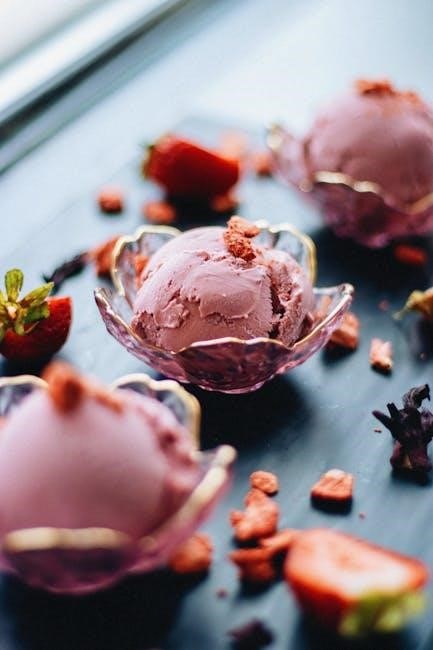
Discover reliable and detailed recipes for strawberry, vanilla, and chocolate ice cream, expanding beyond the Cuisinart booklet’s brief instructions for optimal results.
Strawberry Ice Cream Recipe (Detailed)
Yields: Approximately 1 quart
Prep time: 20 minutes
Freeze time: 20-25 minutes (plus pre-freeze bowl)
Ingredients: 2 cups fresh strawberries (hulled), ¾ cup granulated sugar, 1 cup heavy cream, ¾ cup whole milk, 1 tablespoon lemon juice, ¼ teaspoon vanilla extract.
Instructions:
- Puree strawberries and sugar in a blender until smooth.
- Combine strawberry puree, heavy cream, milk, lemon juice, and vanilla extract in a bowl.
- Refrigerate mixture for at least 2 hours, or preferably overnight, to chill thoroughly.
- Whisk the mixture again before pouring it into the pre-frozen Cuisinart ice cream maker bowl.
- Process for 20-25 minutes, or until the ice cream reaches desired consistency.
- Enjoy immediately or store for later!
Vanilla Ice Cream Recipe (Detailed)
Yields: Approximately 1 quart
Prep time: 10 minutes
Freeze time: 20-25 minutes (plus pre-freeze bowl)
Ingredients: 2 cups heavy cream, ¾ cup whole milk, ¾ cup granulated sugar, 1 tablespoon vanilla extract (quality matters!), a pinch of salt.
Instructions:
- Combine heavy cream, milk, sugar, vanilla extract, and salt in a bowl.
- Stir well until the sugar is completely dissolved. Avoid overmixing.
- Refrigerate the mixture for at least 2 hours, or ideally overnight, for optimal chilling.
- Whisk briefly before pouring into the pre-frozen Cuisinart ice cream maker bowl.
- Process for 20-25 minutes, or until the ice cream reaches a soft-serve consistency.
- Serve immediately or harden further in the freezer.
Tip: Experiment with different vanilla extracts for nuanced flavors.
Chocolate Ice Cream Recipe (Detailed)
Yields: Approximately 1 quart
Prep time: 15 minutes
Freeze time: 20-25 minutes (plus pre-freeze bowl)
Ingredients: 2 cups heavy cream, ¾ cup whole milk, ¾ cup granulated sugar, ½ cup unsweetened cocoa powder (Dutch-processed recommended), 1 teaspoon vanilla extract, a pinch of salt.
Instructions:
- Whisk together cocoa powder and sugar in a bowl.
- Gradually add heavy cream and milk, whisking until smooth and cocoa is fully incorporated.
- Stir in vanilla extract and salt.
- Refrigerate the mixture for at least 2 hours, or overnight, for enhanced flavor.
- Pour into the pre-frozen Cuisinart bowl and process for 20-25 minutes.
- Enjoy immediately or freeze for a firmer texture.
Tip: For richer flavor, melt 2oz of dark chocolate into the warm cream mixture.

Ingredient Quality and Impact on Results
Superior ingredients—heavy cream, vanilla, and sugar—are crucial. Quality directly impacts the final texture and flavor of your homemade ice cream creations.
The Importance of Heavy Cream
Heavy cream is the cornerstone of rich, creamy homemade ice cream. Its high fat content—typically 36-40%—is essential for creating a smooth, non-icy texture. Lower fat alternatives won’t yield the same results, often resulting in a grainy or icy final product. The fat molecules interfere with ice crystal formation, leading to that desirable velvety consistency.
Recipes consistently emphasize the need for full-fat heavy cream. Using a lighter cream or milk substitute compromises the structural integrity of the ice cream base. The Cuisinart ice cream maker relies on this fat content to properly churn and aerate the mixture. Remember to chill the cream thoroughly before beginning, as colder ingredients freeze faster and contribute to a smoother outcome.
Vanilla Extract: Types and Usage
Vanilla extract is a foundational flavor in countless ice cream recipes, significantly impacting the final taste profile. There are several types available: pure vanilla extract, imitation vanilla, and vanilla bean paste. Pure extract, derived from vanilla beans, offers the most complex and authentic flavor. Imitation vanilla uses synthetic vanillin and lacks the depth of the real thing;
Vanilla bean paste provides both flavor and visual appeal, with tiny flecks of vanilla bean. When using extract in your Cuisinart ice cream maker, start with one to two teaspoons per quart of base. Adjust to taste, remembering that the flavor will mellow slightly during freezing. Quality matters; invest in a good extract for superior results!
Sugar: Granulated vs. Other Options
Sugar’s role extends beyond sweetness in ice cream; it impacts texture and freezing point. Granulated sugar is the standard choice, providing a clean sweetness and preventing excessive ice crystal formation. However, alternatives exist. Caster sugar (superfine sugar) dissolves more readily, creating a smoother base. Corn syrup adds a softer texture and prevents crystallization, but use it sparingly.
Brown sugar introduces molasses notes, altering the flavor profile. Honey or maple syrup can be used, but they contain more water, potentially resulting in a softer ice cream. Adjust liquid ingredients accordingly. For optimal results with your Cuisinart, stick to granulated sugar unless experimenting with flavor variations.
The Freezing Process: Achieving the Perfect Consistency
Optimal freezing requires a thoroughly chilled bowl and consistent churning. Monitor the mixture’s texture; it should thicken to a soft-serve consistency within 20-25 minutes.
Optimal Freezing Time
Achieving the ideal ice cream consistency hinges on proper freezing time. Generally, the Cuisinart 2-quart ice cream maker requires approximately 20 to 25 minutes to transform your liquid base into a delightful frozen dessert. However, this timeframe isn’t absolute and can fluctuate based on several factors.
Ambient temperature plays a crucial role; warmer kitchens may necessitate slightly longer freezing durations. The initial temperature of your ingredients is also significant – ensuring they are well-chilled before starting the process will expedite freezing. Regularly observe the mixture’s texture during churning.
It should gradually thicken, resembling soft-serve ice cream. Avoid over-churning, as this can result in a grainy texture. Once the desired consistency is reached, promptly transfer the ice cream to a suitable storage container for hardening;
Monitoring the Ice Cream’s Texture
Consistent observation of your ice cream’s texture during the churning process is paramount for achieving optimal results. Initially, the mixture will be liquid, gradually thickening as it freezes. After about 10-15 minutes, you should notice it beginning to resemble a thick custard.
Continue churning, paying close attention to how the mixture clings to the sides of the bowl. The ideal endpoint is a soft-serve consistency – thick enough to hold its shape but still pliable.
Avoid the temptation to over-churn, as this can lead to a grainy texture. If the mixture appears too soft after 25 minutes, allow it to continue churning for a few more minutes, checking frequently.
Troubleshooting Common Freezing Issues
If your ice cream isn’t freezing, ensure the bowl was pre-frozen for at least 24 hours, and is completely frozen solid before use. A partially frozen bowl is a frequent culprit. Also, verify the mixing paddle and lid are securely in place, as the machine won’t operate without them.
Grainy texture often results from slow freezing or over-churning. Ensure ingredients are well-chilled before starting. If the mixture freezes too hard, briefly stop the machine and stir to redistribute the ice crystals.
For consistently soft results, consider reducing the freezing time or adding a stabilizer like corn syrup.

Storage Solutions for Homemade Ice Cream
Proper storage maintains quality. Utilize loaf pans for initial hardening, then transfer to airtight containers for freezing, minimizing ice crystal formation and preserving texture.
Using Loaf Pans for Storage
Initial hardening in loaf pans is a popular technique for homemade ice cream, particularly after churning with a Cuisinart machine. This method rapidly firms up the soft-serve consistency, preventing excessive ice crystal development. Simply pour the freshly churned ice cream into a loaf pan, ensuring an even layer.
Cover the surface directly with plastic wrap, pressing it gently onto the ice cream to eliminate air pockets – this is crucial for preventing a crusty top layer. Then, wrap the entire loaf pan tightly with plastic wrap or aluminum foil. Refrigerate for at least 2-4 hours, or until solid enough to scoop. This pre-hardening step significantly improves the final texture when transferred to long-term storage containers.
Air-Tight Containers and Freezing
For extended storage, transfer the hardened ice cream from the loaf pan to airtight containers. Glass or plastic containers specifically designed for freezing are ideal, minimizing air exposure. Leave about half an inch of headspace at the top, as ice cream expands slightly during freezing.
Press a piece of plastic wrap directly onto the surface of the ice cream within the container before sealing the lid. This further reduces air contact and helps maintain a smooth texture. Properly sealed, homemade ice cream can be stored in the freezer for up to two weeks, though best quality is achieved within the first week.
Preventing Ice Crystal Formation
Ice crystal formation is the enemy of smooth, creamy homemade ice cream. Rapid freezing during the churning process minimizes initial crystal size, but proper storage is crucial. Utilizing airtight containers, as previously discussed, is paramount. The addition of stabilizers like corn syrup or glucose can also inhibit crystal growth, though not always necessary.
Quickly transferring the ice cream to the freezer after churning is vital. Avoid prolonged exposure to warmer temperatures. Furthermore, the fat content in your recipe plays a role; higher fat content generally results in a smoother texture and fewer ice crystals.

Cleaning and Maintenance
Regular cleaning ensures longevity. Disassemble components after each use, wash with warm, soapy water, and thoroughly dry. The manual details proper procedures and storage guidelines.
Disassembling the Ice Cream Maker
Before cleaning, carefully disassemble your Cuisinart ice cream maker. Begin by unplugging the unit. Remove the lid and the mixing paddle; the manual emphasizes ensuring these are in place during operation, but now they need removal; Next, detach the freezer bowl – handle with care, as it’s pre-frozen and can be fragile.
The instruction booklet highlights the importance of separating all parts for thorough cleaning. Pay attention to the drive connector and any associated rings or seals. These smaller components often require extra attention to remove any lingering ice cream residue. Refer to the Cuisinart manual’s diagrams for visual guidance if needed, ensuring you understand how each piece fits together for reassembly later.
Proper Cleaning Procedures
After disassembling, wash all removable parts – bowl, lid, paddle, and drive connector – in warm, soapy water. The Cuisinart manual stresses avoiding abrasive cleaners, which can damage the surfaces. Rinse thoroughly to remove all soap residue. While the bowl is dishwasher-safe (top rack), handwashing is recommended to preserve its freezing properties.
The motor base should be wiped clean with a damp cloth; never immerse it in water. Ensure all parts are completely dry before reassembling. Proper cleaning, as detailed in the instruction booklet, prevents bacterial growth and ensures optimal performance for future ice cream creations. Regular maintenance extends the life of your Cuisinart machine.
Long-Term Storage of the Unit
When storing for extended periods, ensure all components are meticulously clean and completely dry, as outlined in the Cuisinart manual. Store the motor base in a cool, dry place, away from direct sunlight. The freezing bowl requires special attention; it’s best stored in a freezer bag to prevent odor absorption.
Avoid stacking heavy items on top of the bowl, which could compromise its functionality. The instruction booklet advises keeping the original packaging for safe storage. Proper long-term storage safeguards your investment, ensuring your Cuisinart ice cream maker remains ready for delicious creations whenever inspiration strikes.
Resources and Support
Access Cuisinart’s website for manuals, recipes, and support. Explore online communities like r/icecreamery and discover additional ice cream cookbooks for inspiration!
Cuisinart Website for Manuals and Recipes
The official Cuisinart website (www.cuisinart.com) serves as a central hub for all things related to your 2-quart ice cream maker. Here, you can readily download instruction manuals for various models, including those you may have misplaced. These manuals detail crucial safety precautions, component identification, and step-by-step guidance on crafting frozen desserts.
Beyond manuals, Cuisinart provides a curated collection of recipes specifically designed for their ice cream makers. These recipes range from classic vanilla and chocolate to more adventurous flavors, offering a starting point for your culinary explorations. The website also features troubleshooting tips and FAQs to address common issues you might encounter during the ice cream-making process, ensuring a smooth and enjoyable experience.
Online Communities (r/icecreamery)
Reddit’s r/icecreamery is a vibrant online community dedicated to all things homemade ice cream, offering a valuable resource for Cuisinart 2-quart ice cream maker owners. Users frequently share experiences, troubleshoot issues, and exchange recipes, providing practical advice beyond the official manual. A recent post highlighted concerns about the brevity of recipes in the Cuisinart booklet and a desire for metric conversions.
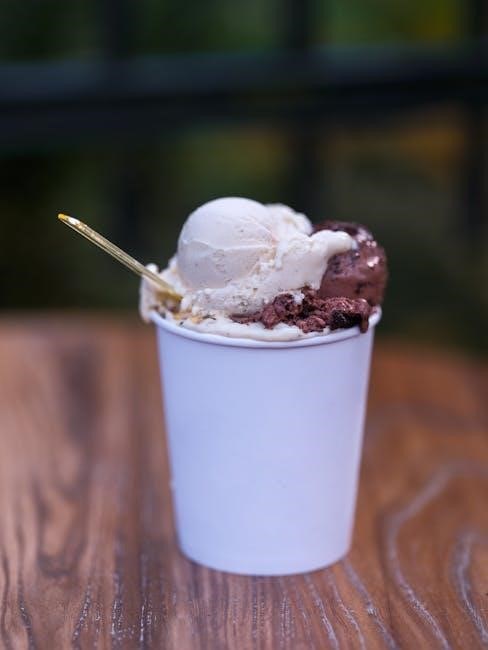
This forum is an excellent place to ask specific questions about your machine, seek recommendations for trusted recipes with detailed instructions, and discover ice cream cookbook suggestions, particularly those utilizing metric measurements. Engaging with fellow enthusiasts can unlock a wealth of knowledge and inspire creative flavor combinations.
Finding Additional Ice Cream Cookbooks
Expanding beyond the Cuisinart booklet, numerous ice cream cookbooks cater to both beginners and experienced enthusiasts. Many users on online forums, like r/icecreamery, actively seek recommendations for cookbooks featuring metric measurements, a preference for those accustomed to this system. While specific titles weren’t explicitly mentioned, the demand indicates a gap in the market for accessible, metric-based ice cream recipes.
Consider exploring cookbooks focused on dessert science or frozen desserts specifically. These often provide a deeper understanding of the ingredients and processes involved, allowing for greater customization and troubleshooting. Resources detailing ice cream maker manuals are also available online, offering a broader perspective.